Transitional Housing Indianapolis, IN
Stay Long Enough to Get Steady.
Transitional housing Indianapolis adults move into while they save, sort out documents, and get ready to hold a lease on their own. Furnished rooms, house rules in writing, and a case coordinator working it with you.
- House rules in writing
- A case coordinator
- Furnished rooms
Who Transitional Housing Indianapolis Serves
Short-term housing has a habit of running out before your situation changes.
A shelter bed resets every morning. A motel room takes every dollar you earn, so you never get far enough ahead to put down a deposit. A friend’s couch has a limit, and you can usually feel it coming.
Transitional housing solves the timing problem. You get somewhere to live for long enough that the work you are doing actually adds up.
Are leaving a shelter and need a stay that does not reset every night.
Finished treatment and cannot safely go back to the place they were living.
Are working, but every paycheck goes straight toward weekly rent.
Lost a living situation and need time to rebuild rather than a night off the street.
What Living Here Looks Like
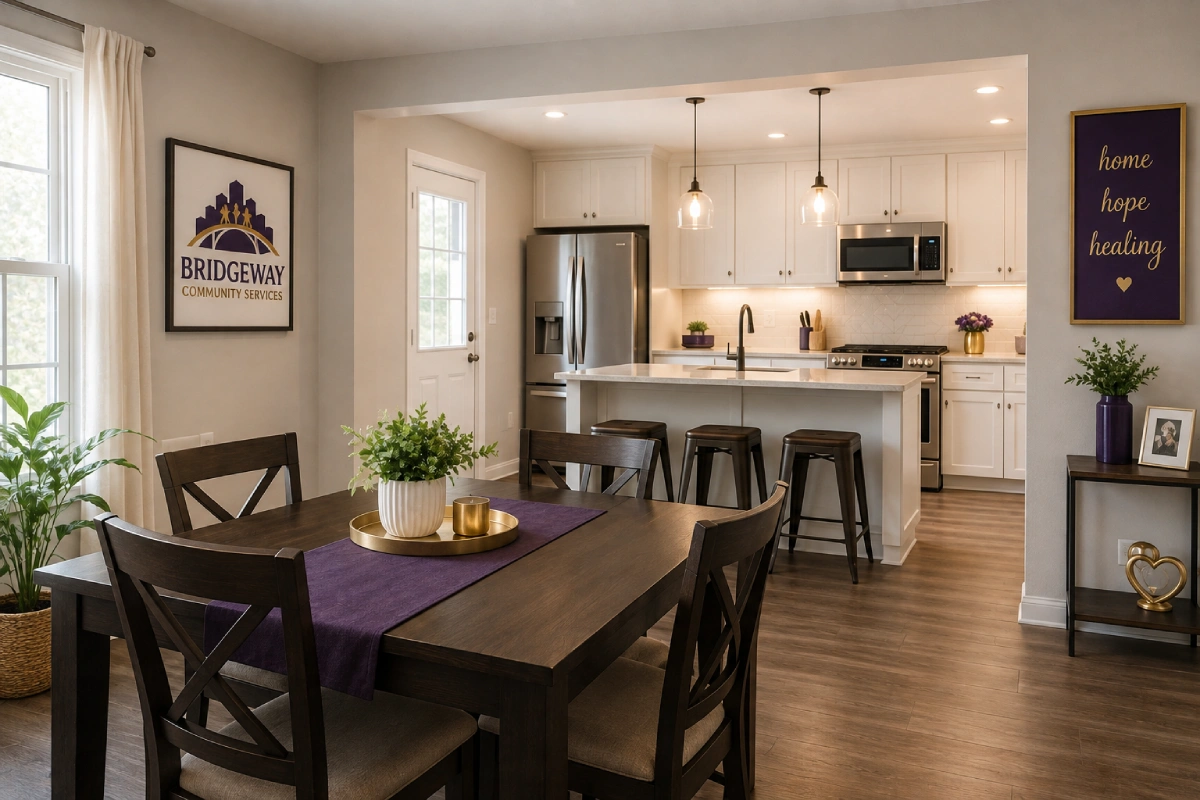
A Bridgeway home is a house, not a facility. Shared kitchen, shared living space, and a room that is yours.
The room comes furnished. Bed, storage, and the basics already in place, because most people arrive carrying whatever fits in a bag. Private and shared bedrooms are both available.
House rules exist and you read them before you move in. They cover the things that decide whether a shared home works: respect, quiet hours, guests, chores, and what happens if something goes wrong. Nothing in them is a surprise sprung on you later.
Support That Comes With Your Room
Housing on its own runs out. What decides whether the stay works is what happens in the months you are here.
Every Bridgeway resident works with a case coordinator. One person, who knows your situation, and whose job is making sure the next step actually happens rather than sitting on a list.
Documents
State ID, birth certificate, social security card. The paperwork every application asks for and nobody hands you on the way out.
Work
Job search, applications, interview preparation, and connections to employers and training programs.
Benefits
Applying for what you qualify for, and following up when the process stalls.
Healthcare
Getting to work, to appointments, and to everything the plan depends on.
Transport
Getting to work, to appointments, and to everything the plan depends on.
Life skills
Budgeting, tenancy readiness, and the practical parts of holding a place of your own.
Housing and support services provided by Bridgeway Community Services are non-medical. Bridgeway does not provide medical care, nursing services, treatment, or medication management. Residents who need clinical services are connected to licensed providers.
How Long You Stay
Transitional housing is time-limited on purpose. The point is to leave, and to leave into something better than what you arrived from.
Your stay gets reviewed with your case coordinator rather than decided at you. Those conversations cover what has moved, what has not, and what still needs to happen before you are ready to hold your own place.
Nobody gets a surprise move-out date. If your stay is coming to an end, you know well before it does, and the plan for what comes next gets built with you.
Who Refers Residents to Us
Some residents find Bridgeway on their own. Many arrive through someone already working their case.
Bridgeway takes referrals from shelters and outreach organizations, treatment and recovery providers, hospitals and healthcare systems, social workers and case managers, community corrections and probation departments, veterans organizations, and faith-based organizations.
You do not need a referral to apply. If you have someone helping you, they can send a placement request instead and it reaches the same place.
Common Questions
Five answers people ask for before they apply. Where a figure is still pending, the gap is marked rather than filled with a guess.
Who qualifies for transitional housing at Bridgeway?
Our program is open to veterans, individuals transitioning from homelessness, returning citizens, low-income adults, and those with mild mental or physical challenges who can live independently. If you are unsure whether you qualify, apply and Bridgeway will tell you directly.
How long do residents stay?
Length of stay is based on individual progress and readiness. Our goal is to provide stability and support for as long as needed to promote independent living. Your stay is reviewed with your case coordinator and any move-out date is planned with you well in advance.
What does transitional housing cost?
Our housing is affordably priced and includes all utilities and support services. Specific pricing details are discussed during the intake process.
Do I need a referral to apply?
No. Anyone can apply directly through the application form. Referrals from agencies are welcome and go through a separate placement request, but they are not a requirement. Applying without one puts you in the same queue.
What are the house rules?
Our homes operate under clear written rules and expectations provided before move-in. They cover respect, accountability, quiet hours, guests, chores, and what happens if something does not go as expected. You read the full set before your first night.
Apply for Transitional Housing
One form starts it. Tell us where things stand and Bridgeway comes back with a real answer on availability and timing.
Placing someone rather than applying yourself? Send a placement request. Want to talk it through first? Book a call.
Coming home from incarceration? Read about reentry housing Indianapolis. Or read more about Bridgeway Community Services Indianapolis.